Time:16:00-17:30, Tue., April 7, 2026
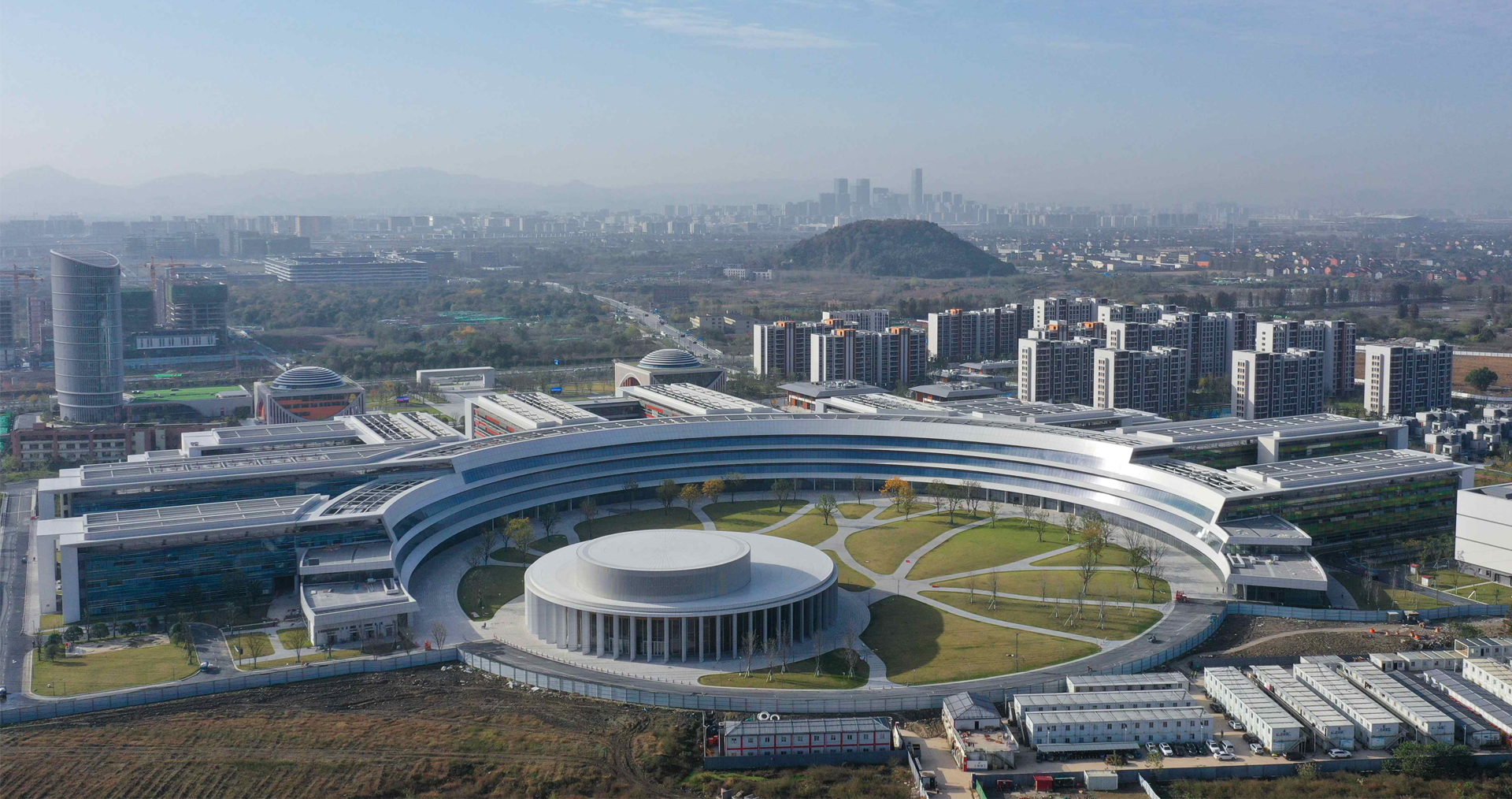
Venue:E10-304, Yungu Campus
Host:Dr. Yao Yang, Assistant Professor, Westlake University
Language:Chinese
Speaker:
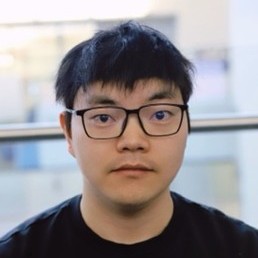
Guanxing Li
ZJU100 Young Professor
Zhejiang University
Biography:
Dr. Guanxing Li will soon begin his role as a Principal Investigator at Zhejiang University under the ZJU100 Young Professor program. He received his B.Sc. degree from Wuhan University in 2018 and his M.Sc. degree from Zhejiang University in 2021 (Prof. Yong Wang’s group). He then obtained his Ph.D. from King Abdullah University of Science and Technology (KAUST), Saudi Arabia, in 2024 (Prof. Yu Han’s group). Then, he worked as a postdoctoral researcher with Prof. David A. Muller (Member of the National Academy of Engineering, USA) at Cornell University, with the Kavli fellowship. His research focuses on developing low-dose, high-resolution imaging techniques for beam-sensitive materials such as zeolites, metal-organic frameworks (MOFs), and covalent organic frameworks (COFs). He specializes in dose-efficient transmission electron microscopy methods, including low-dose HRTEM, iDPC-STEM and multislice electron ptychography based on 4D-STEM. He has authored over 40 publications in leading journals, including Science, JACS, Nature Communications, Science Advances, Chemical Reviews, and Advanced Materials, accumulating more than 1,700 citations and an h-index of 24 (Google Scholar).
Abstract:
Multislice electron ptychography (MEP) has recently demonstrated unprecedented high-resolution imaging performance. It offers several key advantages over conventional (S)TEM modalities, including record-breaking spatial resolution, intrinsic depth resolution, high sensitivity to light elements, compatibility with relatively thick specimens, and outstanding dose efficiency. Nevertheless, when imaging radiation-sensitive materials such as zeolites, MOFs, and COFs under very low electron doses, iterative reconstructions often diverge or converge to incorrect solutions. Achieving reliable MEP imaging using 4D-STEM datasets with low signal-to-noise ratios therefore requires careful optimization of experimental parameters.
In this talk, I will discuss a practical workflow and parameter-selection strategy for low-dose MEP on radiation-sensitive materials with atomic resolution. Key aspects include the choice of critical parameters, including imaging parameters like accelerating voltage, convergence and collection semi-angles, defocus settings, real- and reciprocal-space sampling, as well as reconstruction parameters including scan position corrections. These guidelines aim to facilitate robust reconstructions in dose-limited experiments and provide a general framework for imaging other beam-sensitive materials.
Contact:
郭盈沂
guoyingyi@westlake.edu.cn